1. Keep people away from wastewater
If sewage or dirty water is escaping, keep children, pets, staff and visitors away. Avoid touching it or walking through it. Do not open a chamber, reach into a drain or enter a confined space. If water is near electrical equipment, do not approach; contact the appropriate emergency service or site safety lead.
2. Reduce water use if it is safe
Stop using affected toilets, sinks, baths, washing machines or dishwashers where possible. This can limit additional flow into the affected section while the problem is assessed. Do not repeatedly flush a blocked toilet or test an overflowing chamber by running more water.
3. Record what is happening
From a safe position, note when the issue began, which fixtures are involved, where water is appearing and whether other properties or building areas are affected. Record previous blockages and earlier work. Photos can help if taken without moving closer to wastewater. Do not guess at the source or pipe ownership.
4. Contact the right party
If sewage is entering a building or public area and a public sewer may be involved, tell the relevant sewerage company promptly. Contact a landlord, facilities manager or property owner according to the property arrangement. A private blockage may need drainage help. Read who is responsible for drains? if the boundary is uncertain.
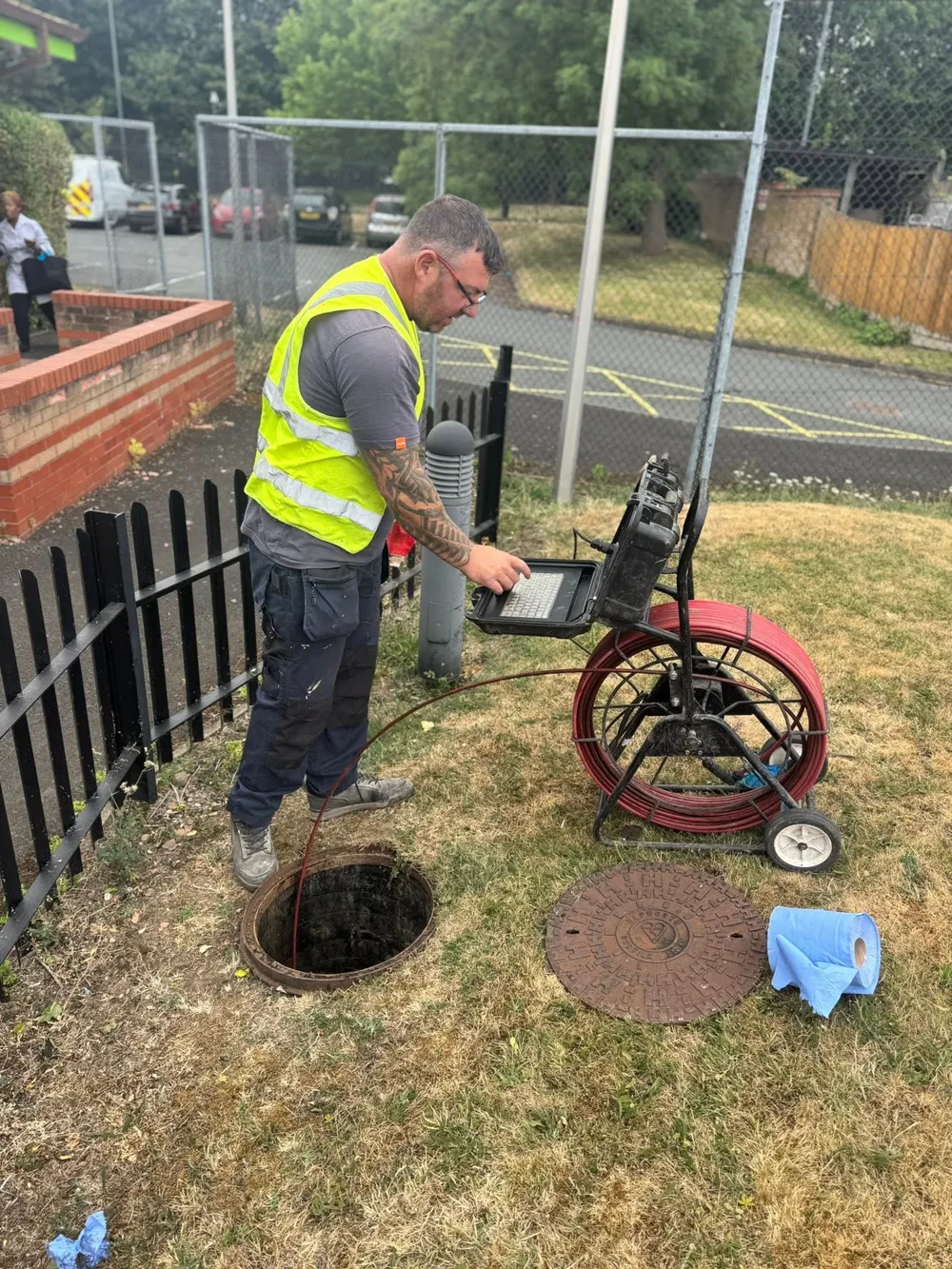
For a private drainage problem in Birmingham or the West Midlands, contact can be used to explain the issue. Emergency unblocking may address an accessible blockage; repeat problems can need a CCTV survey.
Choose the next contact from the situation
- A private fixture or drain is blocked, with no indication of a wider sewer issue: arrange a suitable plumbing or drainage assessment and explain what is affected.
- Several properties report wastewater backup, or the public sewer may be overflowing: report it to the sewerage company for the address; it can assess its network.
- A rented property is affected: notify the landlord or managing agent promptly and keep a record of the report.
- Road drainage or broad floodwater is involved: contact the local authority or relevant flood response service as well.
- Anyone is in immediate danger: contact emergency services.
Do not use this list to diagnose ownership. An external chamber’s location and a neighbour’s report are clues only. The boundary depends on which properties the pipe serves, its route and adoption history; see who is responsible for a drain?.
When reporting the issue, give the exact location, when it began, affected fixtures or areas, whether water is still entering, who else is affected and any earlier incident number. Ask what action is expected next and how to update the report if conditions worsen. Do not promise yourself or others a resolution time based on a call being logged.