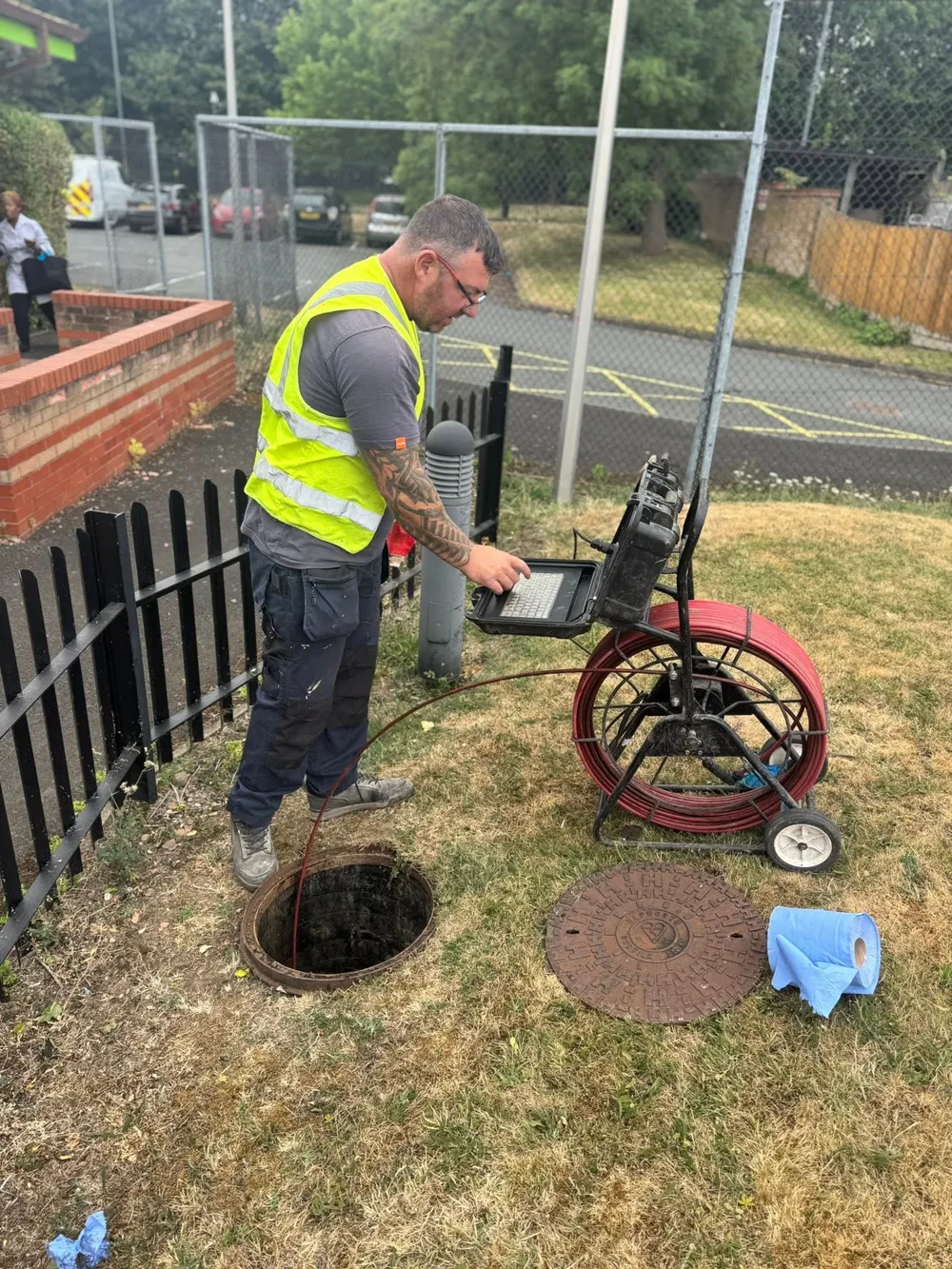
Before the inspection
Explain why the survey is needed: a recurring blockage, suspected damage, property maintenance record or another specific question. Share any drainage plan, previous report or known access point. The route and question matter because a survey can only assess the pipe sections the camera can reach and see.
Access may be through an existing inspection point. Do not uncover a chamber or enter it yourself. If a drain is full of debris or standing water, visibility may be poor; cleaning could be needed before a clear inspection. A survey may therefore be staged rather than produce a complete view on the first attempt.
During camera work
A CCTV camera is guided through accessible pipework to record its internal condition and position. The recording can show visible deposits, joints, cracks, root ingress, deformation or other features. Bends, pipe size, water, deposits and access restrictions can limit the camera’s progress or image quality. The absence of a visible defect on one route does not establish that all connected drainage is sound.
A report is most useful when it records the section inspected, direction and length where available, visible findings and limitations. Observations should be distinguishable from recommendations. For example, a recorded joint movement is a finding; deciding whether it requires repair needs context about severity, flow and the property.
After the survey
Use findings to decide whether to monitor, clean, repair or investigate further. A suitable defect may lead to a local repair, lining or excavation. See how to read a survey report and compare repair choices.
For a survey in Birmingham or the West Midlands, explain the reason for inspection through contact. Keep the report with property records and confirm any follow-on scope before work begins.
Before booking, clarify the survey question
Tell the provider whether the purpose is to investigate a blockage that returns, inspect suspected damage or create a condition record. Share a drainage plan and prior report if available. Ask which access point and route are intended, whether the survey includes a written report or video, and what happens if the camera cannot reach the target section. Confirm whether cleaning or another preparation step is outside the survey scope.
Use this distinction when reviewing the result:
- Observed: a feature visible in the inspected part of the pipe, with a location if recorded.
- Interpreted: what the operator thinks the feature may mean for flow or condition.
- Recommended: a proposed next action, which should be tied to the observation and the reason for it.
A camera survey does not inspect areas it cannot reach or see. A blockage, standing water, bends, branches and deposits can limit visibility. A clear recording of one route therefore does not prove that every connected pipe is free of defects. Ask for the limitations to be stated and keep the original video with the report. For help understanding the report, see how to read a survey.