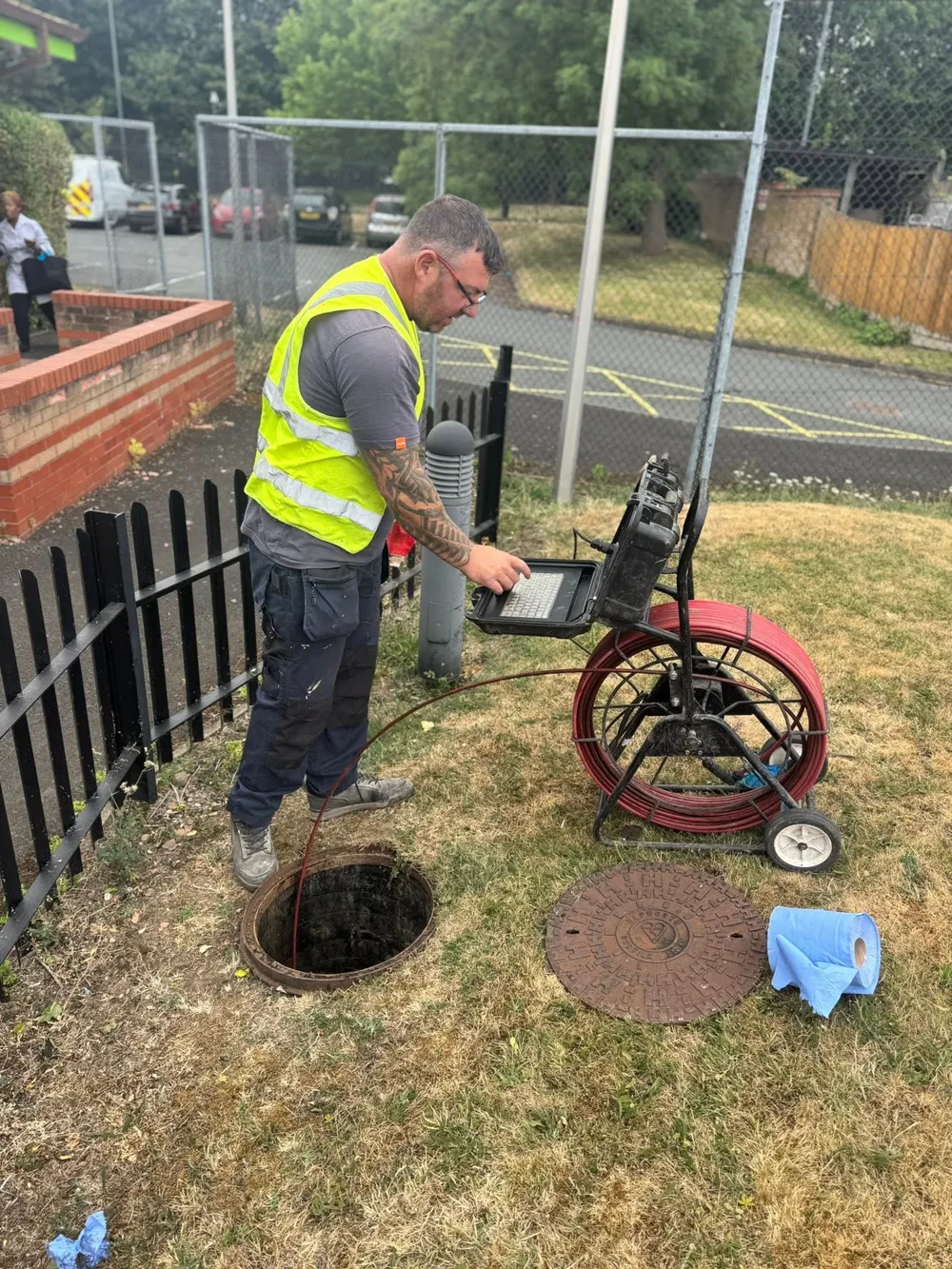
Trace the symptom from a safe place
Rainwater may be collected by gutters and downpipes before reaching a drain, soakaway or other system. Overflow at a roof edge can come from debris, damaged joints, poor alignment or a downstream restriction. Water pooling near a building may have several causes. Observe from the ground and describe where water appears; do not climb ladders or enter a roof space to investigate.
A foul-drain problem has different signs: wastewater fixtures may slow or back up, and an external chamber may rise when water is used indoors. A gutter issue generally appears during or after rainfall. The distinction is useful but not definitive, particularly where rainwater and wastewater share an older combined system.
Keep the systems distinct in a repair discussion
Gutter cleaning can remove debris where accessible. It does not repair damaged brackets, leaking joints or a blocked underground foul drain. If the gutter is clear but still overflows, the cause may need further assessment. If sinks or toilets are also affected, look at blocked drains or outside drain overflow.
Record when the issue appears, the affected elevation, visible debris or staining and where the downpipe discharges if known. For a commercial property, coordinate access and keep people clear of falling debris or water. A maintenance plan should consider building height, roofline, safe access and system condition.
For Birmingham and West Midlands properties, gutter cleaning can be discussed through contact. If the water appears to come from a public highway gully or watercourse, contact the relevant authority rather than assuming a private property drain contractor is responsible.
Rainwater or wastewater?
Record whether the problem appears only during rain or also when toilets, sinks or appliances are used. Roof overflow during rainfall points toward the gutter, downpipe or connected rainwater route, but does not identify which part has failed. Wastewater at a chamber or several indoor fixtures backing up suggests a different system may be involved. Some properties have combined systems, so timing is a clue rather than proof.
Severn Trent says highway drains and gullies are not its responsibility and directs customers to the relevant local authority; it separately describes private drains and public sewers in its responsibility guidance. Do not report a road gully as a private household gutter or assume an underground drain visit will clear it.
When discussing a gutter visit, clarify whether the scope covers debris removal only, whether safe access is available, and whether downpipes or underground connections are included. If overflow continues after cleaning, ask for the cause to be reassessed rather than automatically repeating the same work. Observe only from a safe ground position; do not climb to inspect a roof or gutter.