Repeated blockage is a pattern worth investigating
A drain that blocks again after being cleared can have an underlying cause. Deposits may build back up, roots may enter through a joint, a section may be displaced or damaged, or the route may have limited flow. The same symptom can arise from different conditions, so repeated clearance alone may restore flow without explaining why it failed.
Track the dates, affected fixtures, location and what was done each time. Note whether the blockage returns quickly, only after heavy use or during particular weather. Keep copies of reports and repair records. This history can help distinguish a local recurring obstruction from an issue farther along a shared line.
Use inspection to guide the next decision
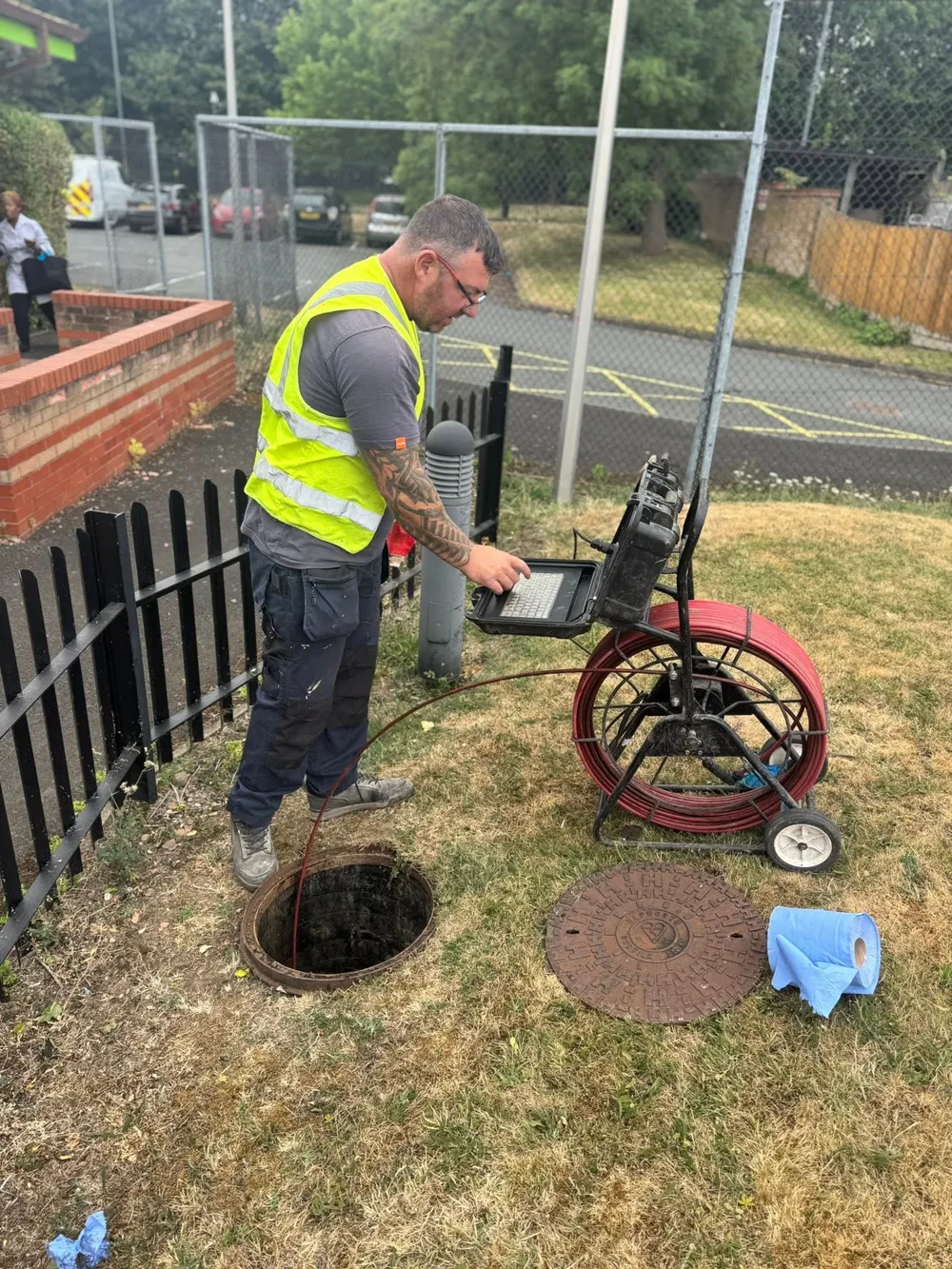
A CCTV drain survey can record visible pipe condition along an accessible route and help locate a suspected defect. Visibility may be limited by deposits, water, bends or restricted access, so a report should state what was inspected and any limitations. A camera finding should be interpreted alongside the symptoms and pipe layout.
If evidence points to a physical defect, compare a local repair, lining or excavation option. If there is a removable blockage, unblocking may be needed first. No single method fits every pipe.
Confirm responsibility and scope
Where several properties are affected or the pipe runs beyond a boundary, the sewerage provider may need to assess its network. A private drain serving one property is commonly the owner’s responsibility, but the layout and history matter. See who is responsible for a drain? before booking work when uncertain.
For recurring problems in Birmingham or the West Midlands, share the sequence of events and any survey report through the contact page. A useful next step addresses the evidence behind the repeat failure, not only the latest symptom.
Build an incident history
A short timeline can reveal whether the same section fails in the same way or several unrelated fixtures are involved. Record the date, location, affected outlets, whether wastewater escaped, the work performed and how long the drain stayed clear. Attach reports rather than relying on memory. If a camera inspection was done, preserve its video, the route inspected and any visibility limits; a repair recommendation should point to evidence in that record.
Compare the pattern before repeating work:
- Same fixture returns: ask whether only the fixture or branch was cleared, or whether a shared section was assessed. Recurrence alone does not prove a hidden pipe defect.
- Several outlets recur together: ask whether they could share a downstream run. This does not identify the exact location.
- Same external chamber overflows: confirm whether the pipe route and responsibility boundary were checked.
- Symptoms return after repair: ask whether a new inspection identifies the repaired area or another section; do not assume the prior work was necessarily ineffective.
If repeated clearance is proposed, ask what new evidence supports repeating it and whether a CCTV inspection can answer a specific question. Camera access and visibility can be limited, so a survey may not see every branch. For options after a defect is located, compare repair, lining and excavation.